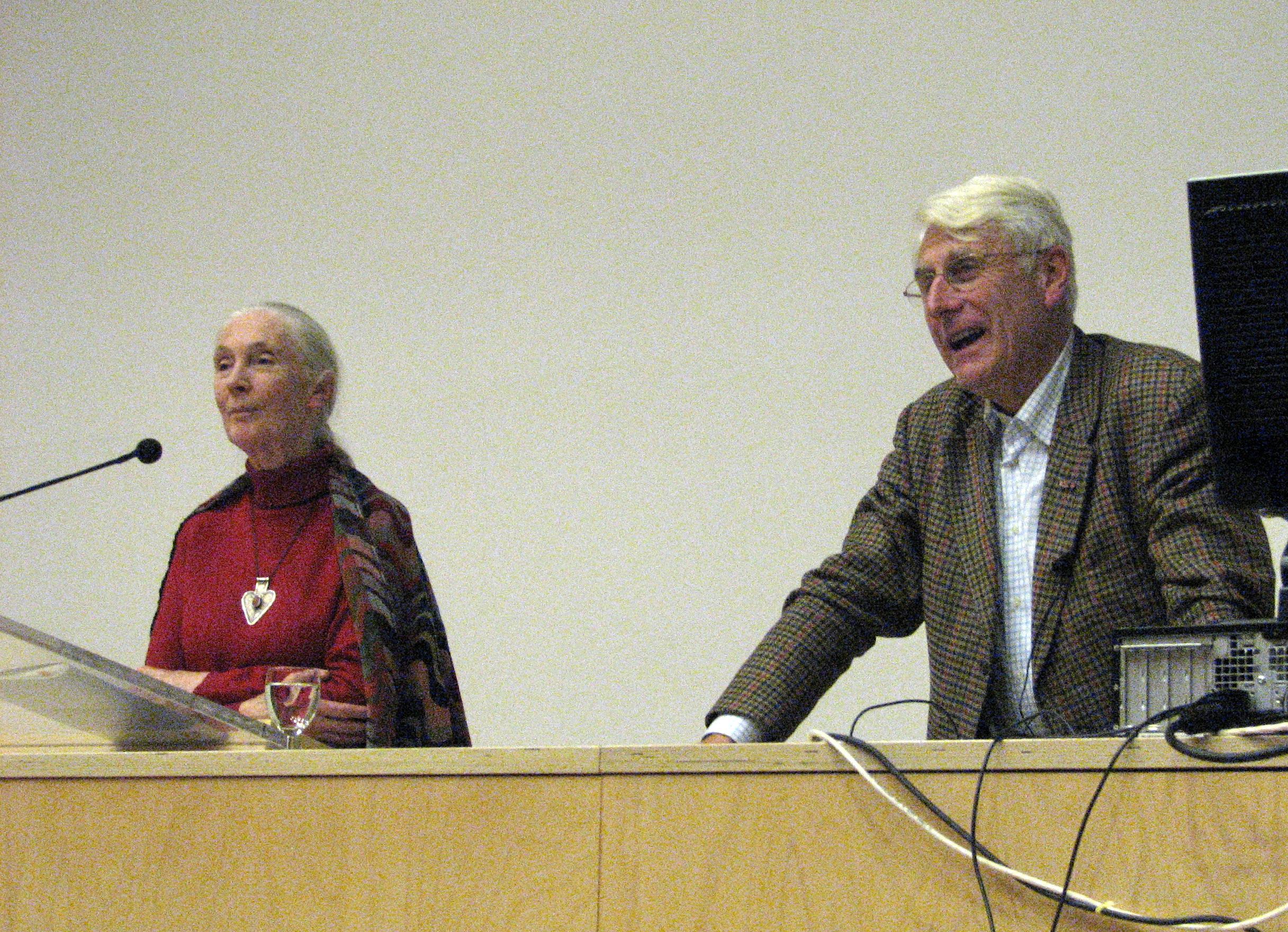
Jane Goodall, an icon as an ethnologist and an example to many, passed away on October 1, 2025, at the age of 91. A great loss for science.
I have regarded Jane Goodall as a role model for all these years. Her most important breakthrough was creating a relationship with chimpanzees in the wild based on mutual respect and mutual trust.
A theme that I, too, have occupied myself with for the past 45 years. Jane Goodall’s secret was the same secret as the secret of the preschool teacher. It is also my secret because parrots, which bite everyone, do not bite me. This theme is addressed in the book: “The Secret of the Preschool Teacher”. The chimpanzee on the cover represents Jane Goodall’s secret.
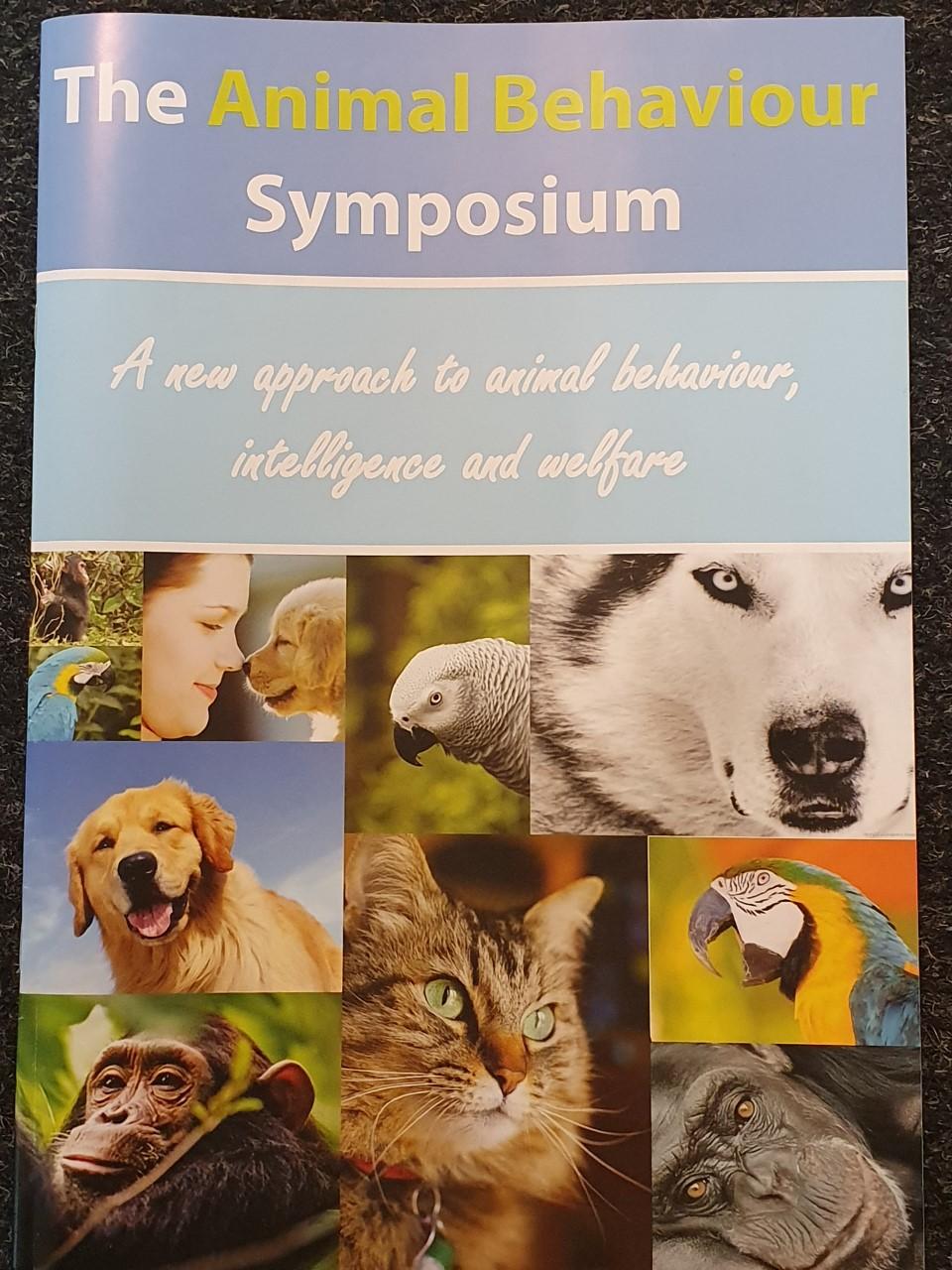
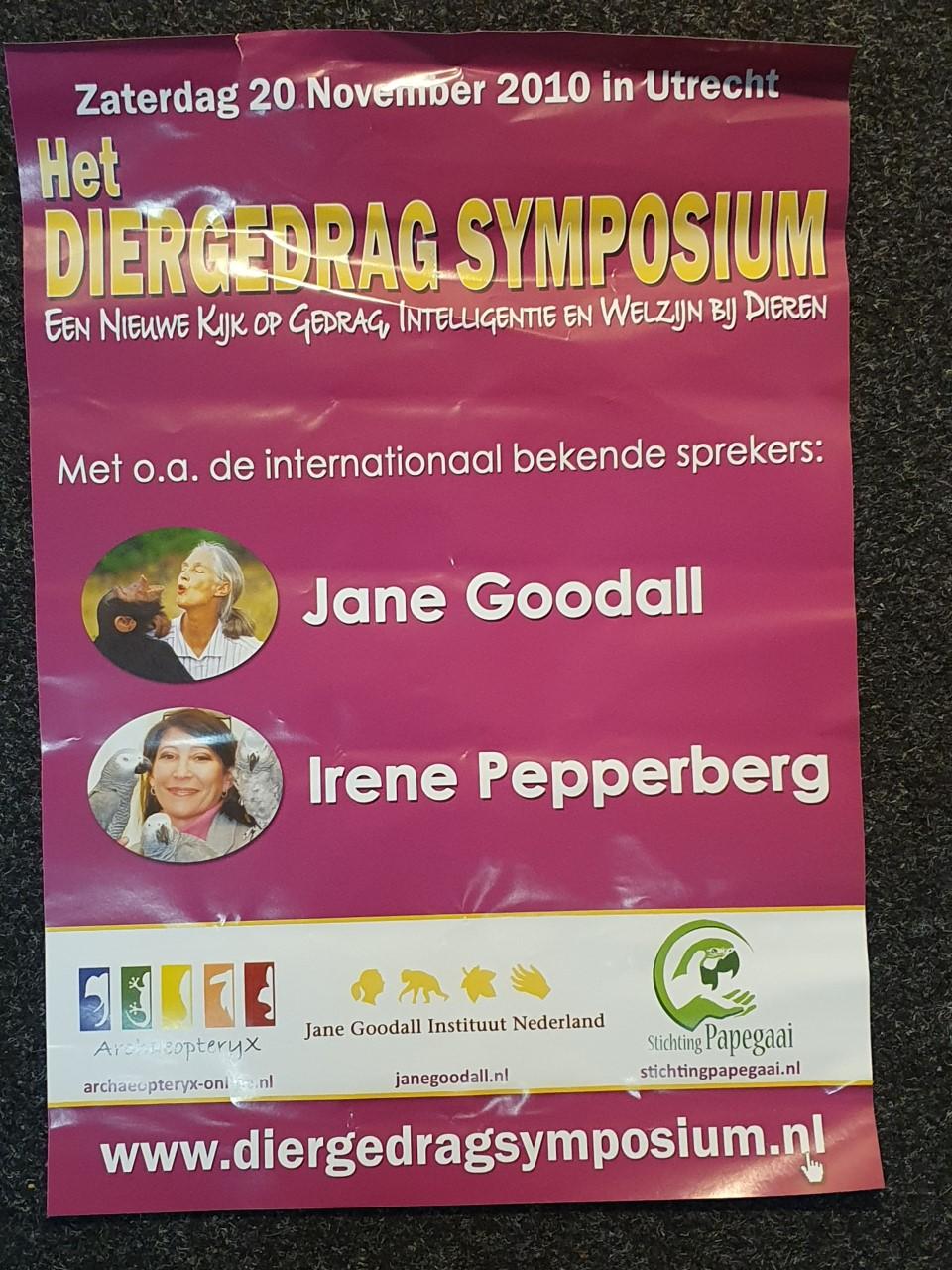
In 2010, partly at the initiative of the Clinic for Birds and Luitzen Santman as a veterinary student, a special symposium was organized together with Archaeopteryx, the Jane Goodall Institute, and the Papegaai Foundation: “The Animal Behaviour Symposium. A new approach to animal behavior, intelligence and welfare”.
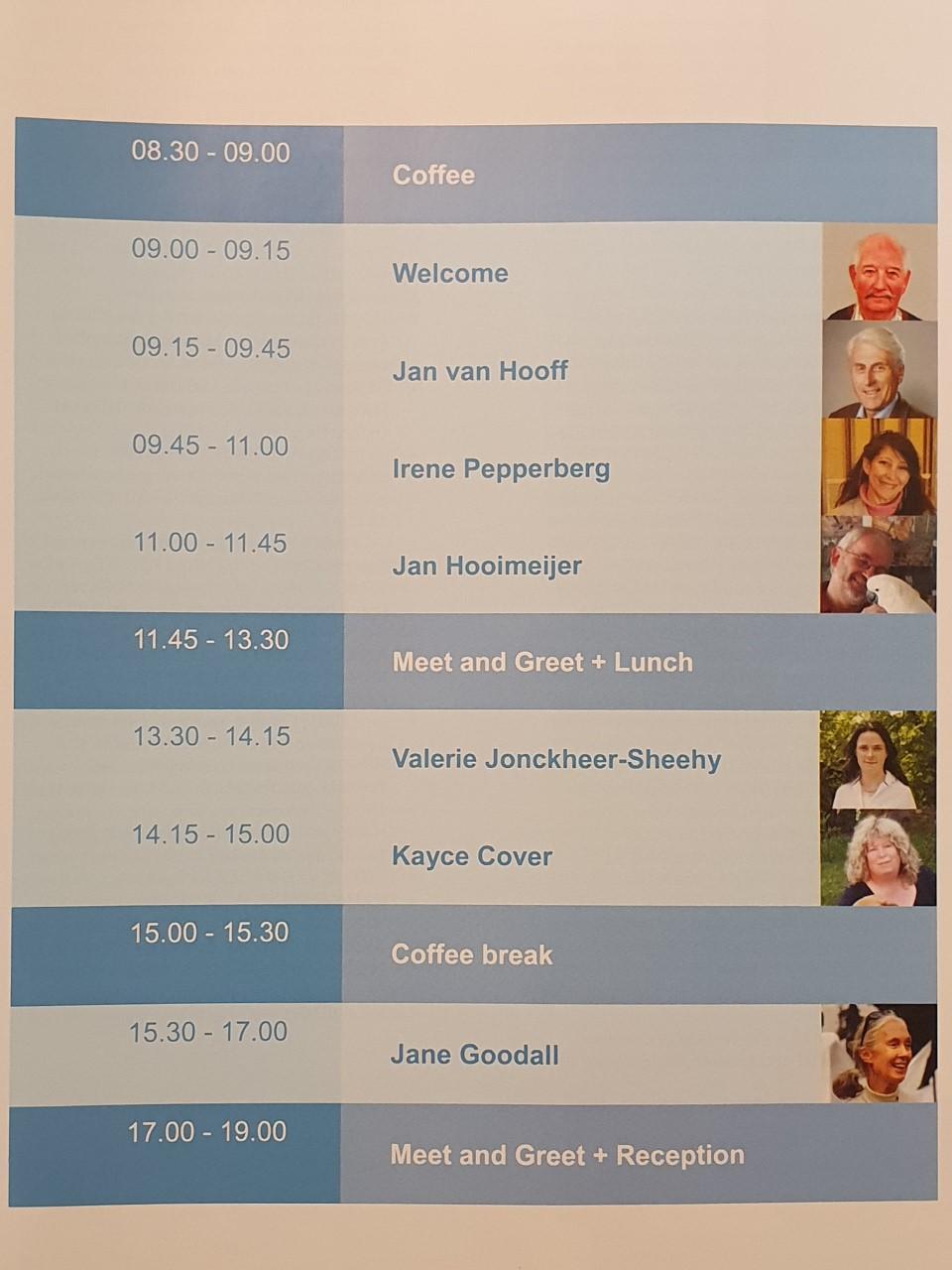
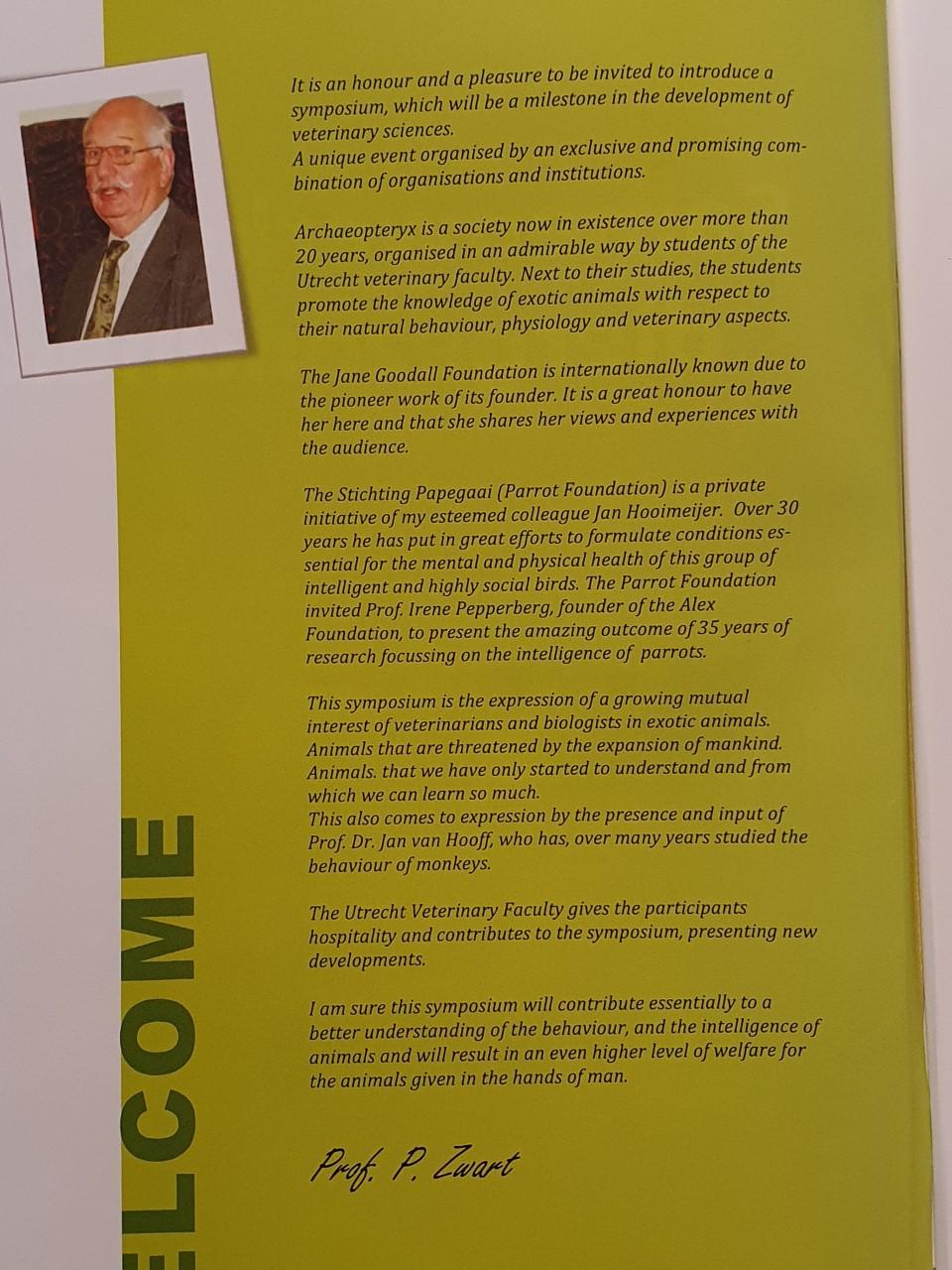
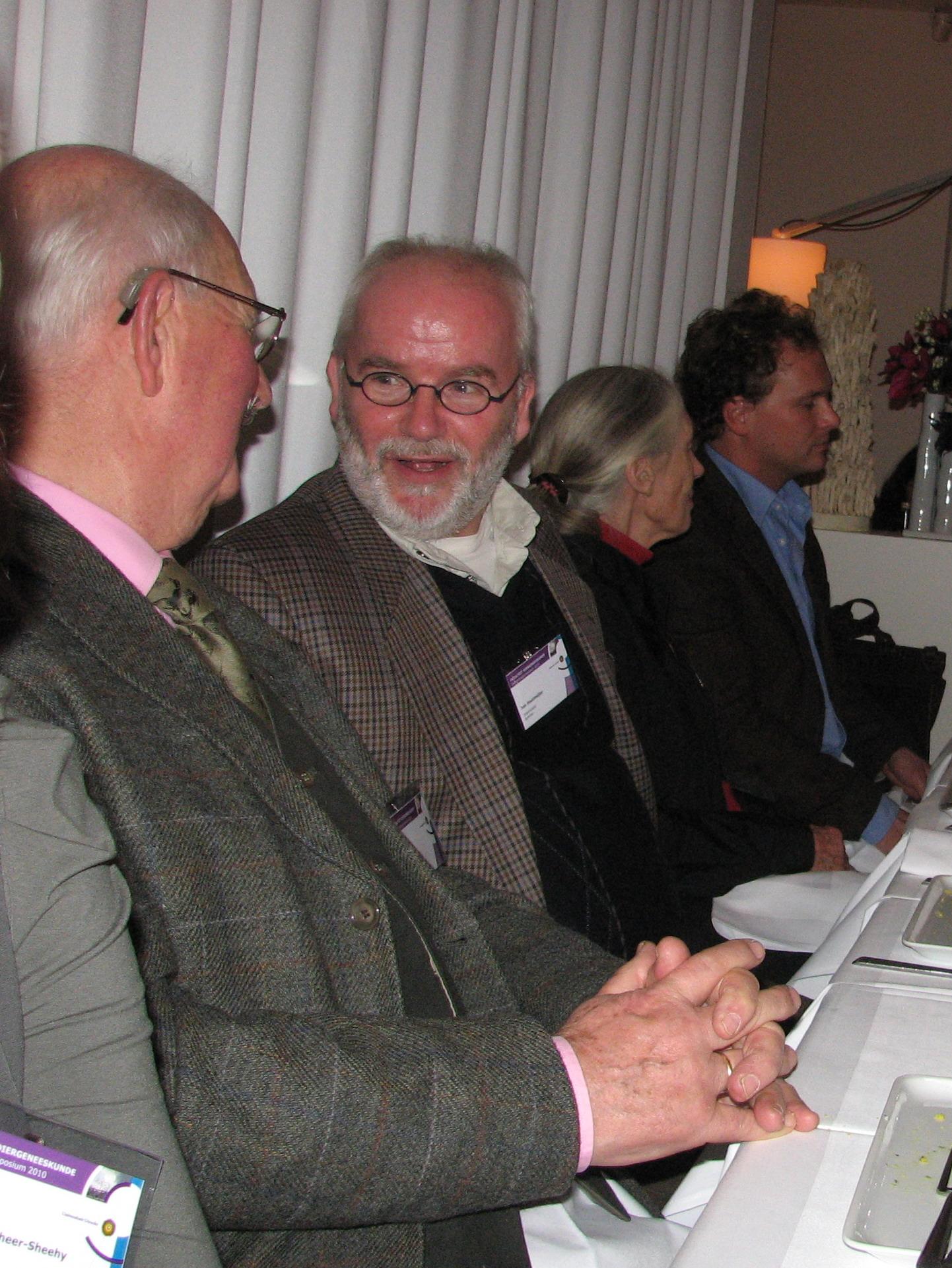
The keynote speaker was Jane Goodall. Additionally, Dr. Irene Pepperberg, Prof. Jan van Hooff, Drs. Jan Hooimeijer, Drs. Valerie Jonckheer-Sheeny, and Kayce Cover were invited to contribute. Prof. P. Zwart was asked to act as chair of the day.
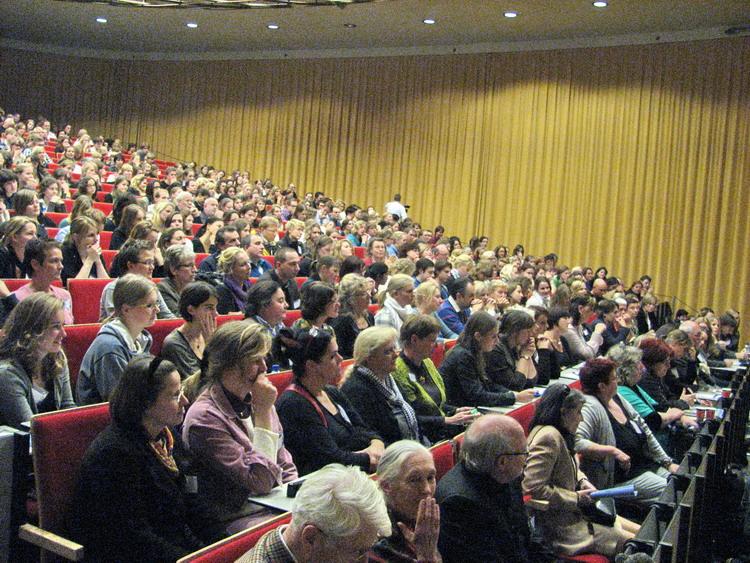
It was a great success, if only because the largest lecture hall at Utrecht University was sold out with 500 participants, meaning numerous people had to be turned away.
A special symposium on looking at and interacting with animals differently, tapping into their intelligence with the aim of safeguarding animal welfare.
Looking back, it is clear that everything contributed by the speakers during this symposium has completely faded into oblivion. Unfortunately, this also applies to the contribution of Jane Goodall, who demonstrated that it is possible to create a positive relationship with chimpanzees in the wild. My presentation focused on creating a relationship with animals based on mutual respect and trust, drawing upon the intelligence and cognitive abilities of animals.
The hope was that this symposium would initiate change at the Faculty of Veterinary Medicine. Unfortunately, colleagues from the Faculty of Veterinary Medicine involved in animal behavior and welfare chose not to participate in this symposium.
In retrospect, the outcome is that the symposium did not have the effect that the organizers and speakers had hoped for.